BUREAU ARCHIVE — ALL STATIONS

Station Archive

The Bureau's complete station index. Every recovered frequency, transcribed and described in full, for visitors navigating without the tuning dial.

  1. The Shipping Ledger

    Frequency
    147 KHZ
    Archive ID
    LW/ARC-01
    Status
    ON FILE
    First broadcast
    1924.01.01
    Last broadcast
    1998.11.30
    Origin
    Grimsby Coastal Wireless Station, United Kingdom
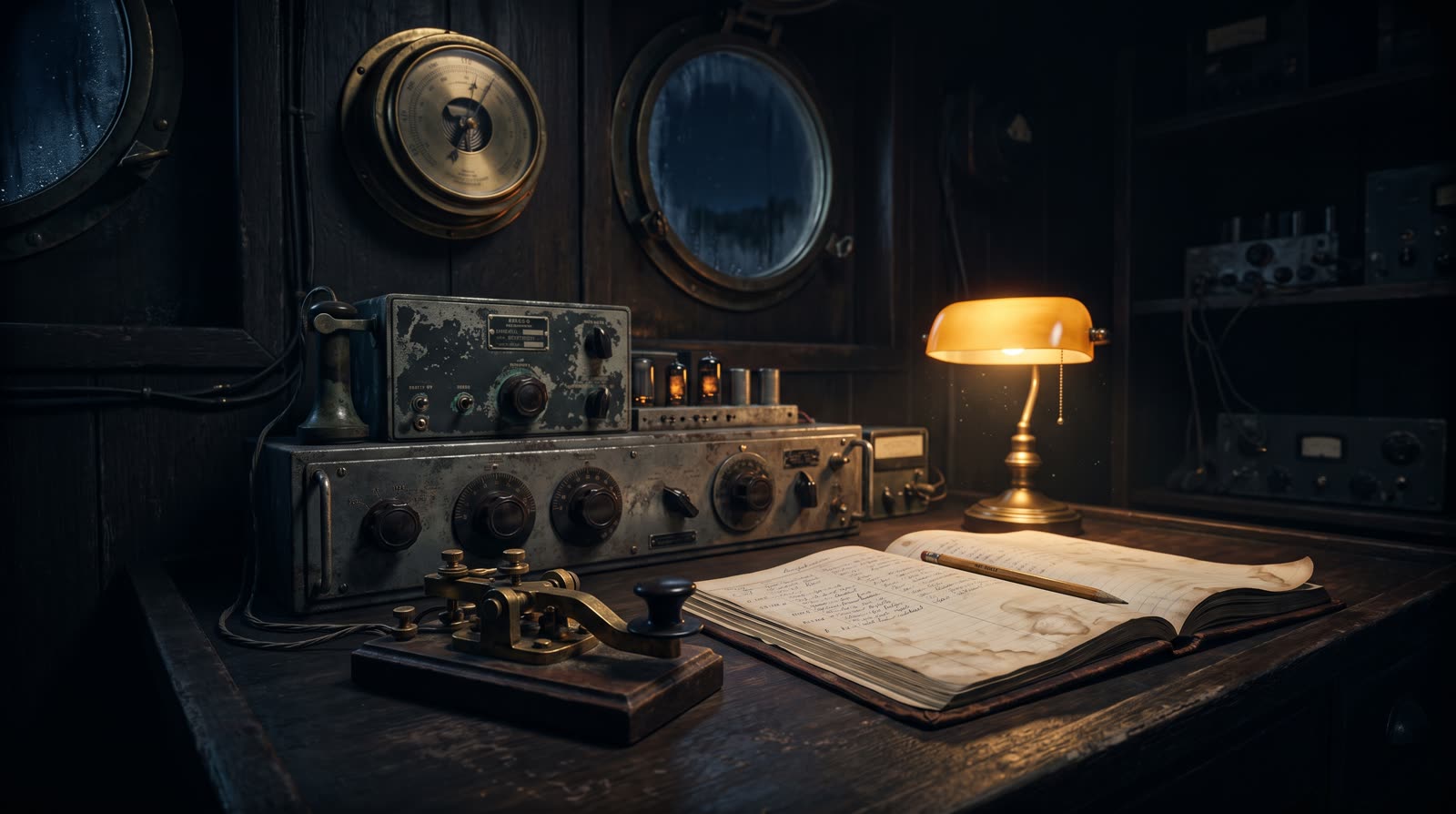
    A weathered marine radiotelegraph console in a coastal station, brass and bakelite dials lit by a single amber lamp, a water-stained shipping logbook open beside a barometer, condensation on a dark porthole window behind.

    The Shipping Ledger broadcast a marine weather forecast twice daily from the Grimsby Coastal Wireless Station, reading sea areas that did not appear on any Admiralty chart. Mariners who logged the broadcast described it as accurate to the hour — squalls arrived where Corvid predicted them, calms settled where Halcyon promised slack water. No agency ever claimed authorship.

    The reading voice changed twice across seventy-four years and was replaced each time without announcement, mid-forecast, as though a shift had simply ended. The cadence never altered: area name, wind direction, barometric trend, area name, wind direction, barometric trend. Static rode under the signal throughout its life, thickest at the turn of each decade for reasons the Bureau has not established.

    Transmission ceased on 1998.11.30 without a sign-off. The final logged forecast covered Area Corvid, falling slowly, and Area Halcyon, backing west. Coastal listening posts in three countries confirmed simultaneous loss of carrier. The frequency has been monitored continuously since and has produced only static.
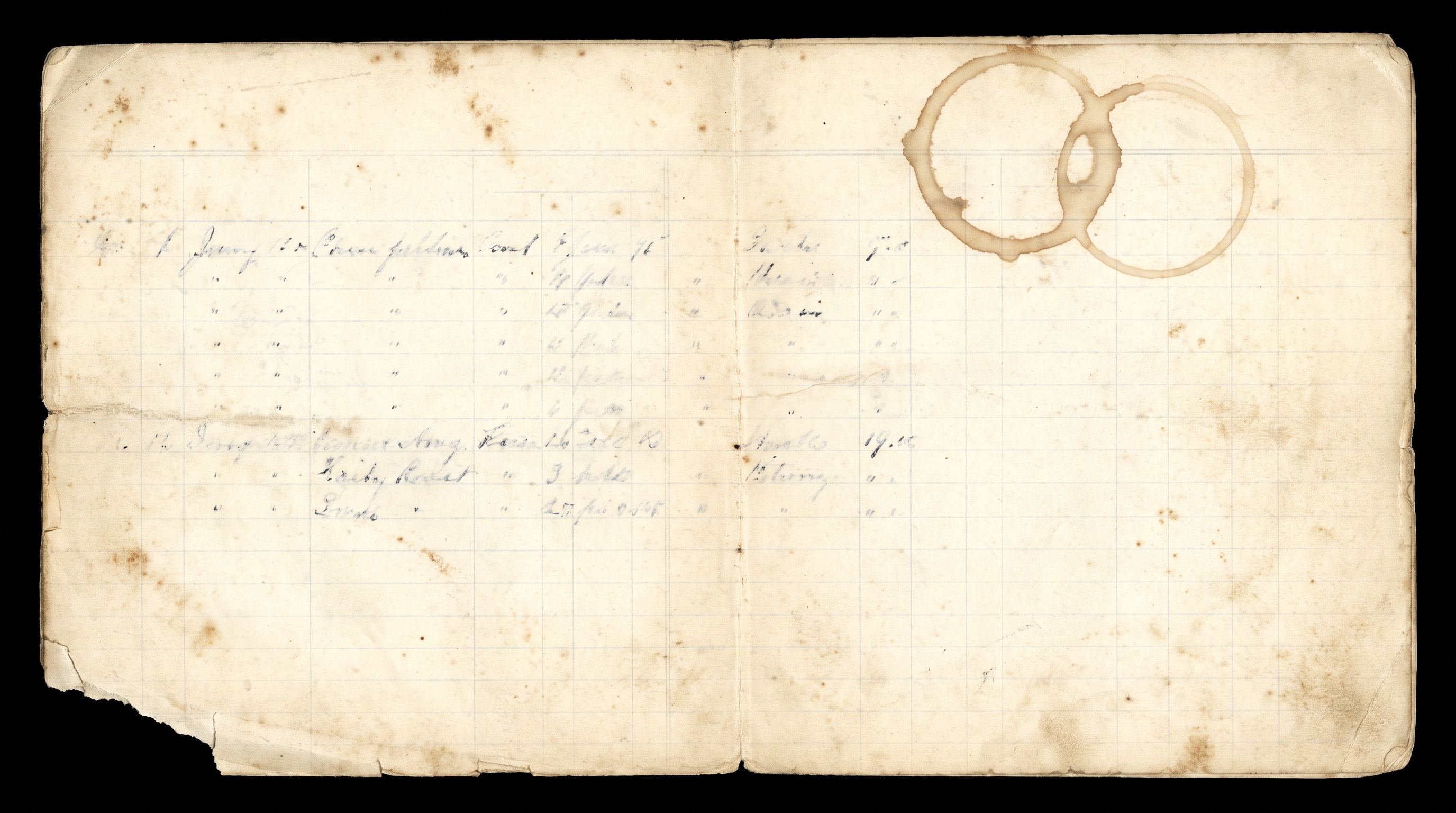
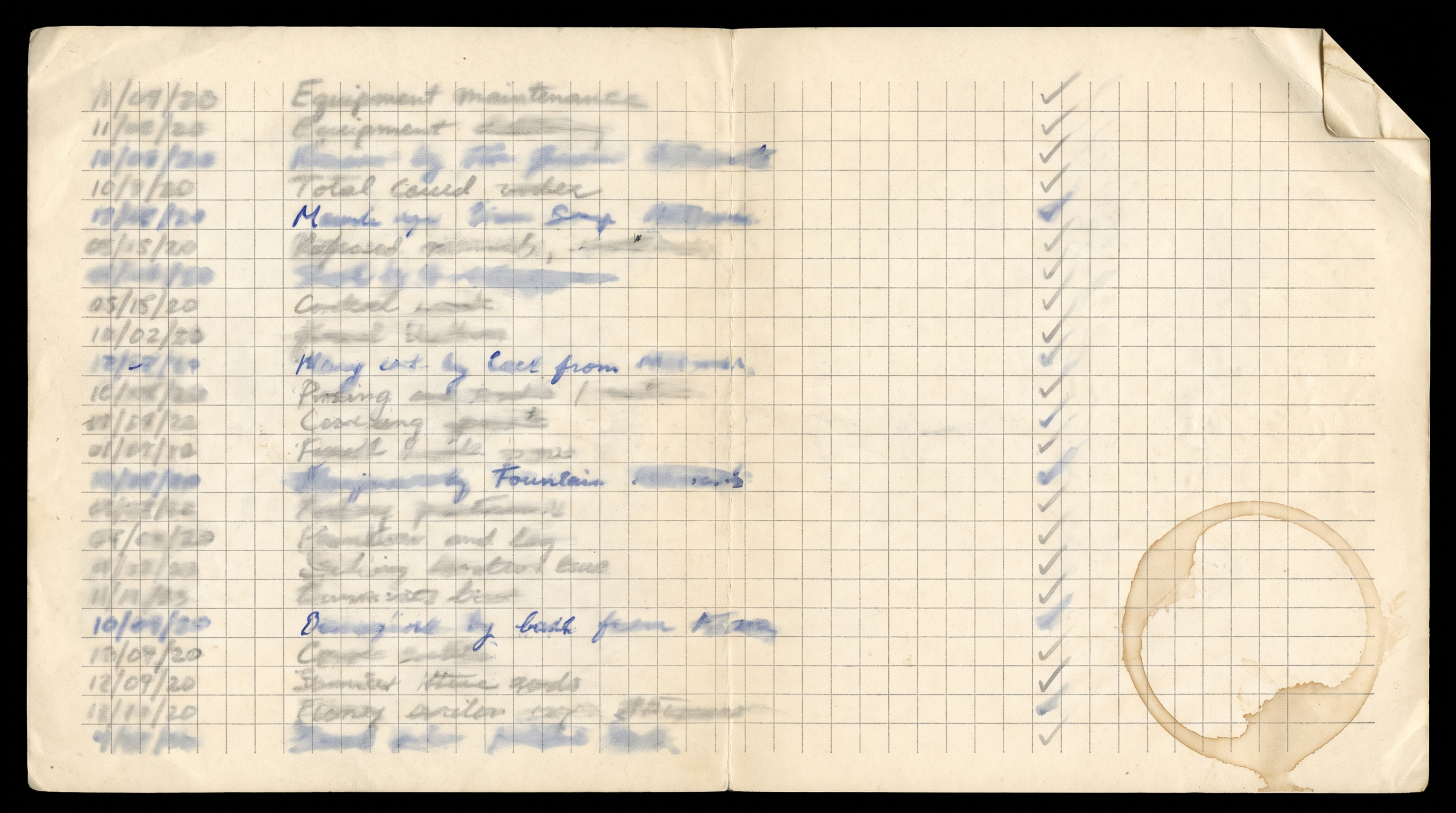
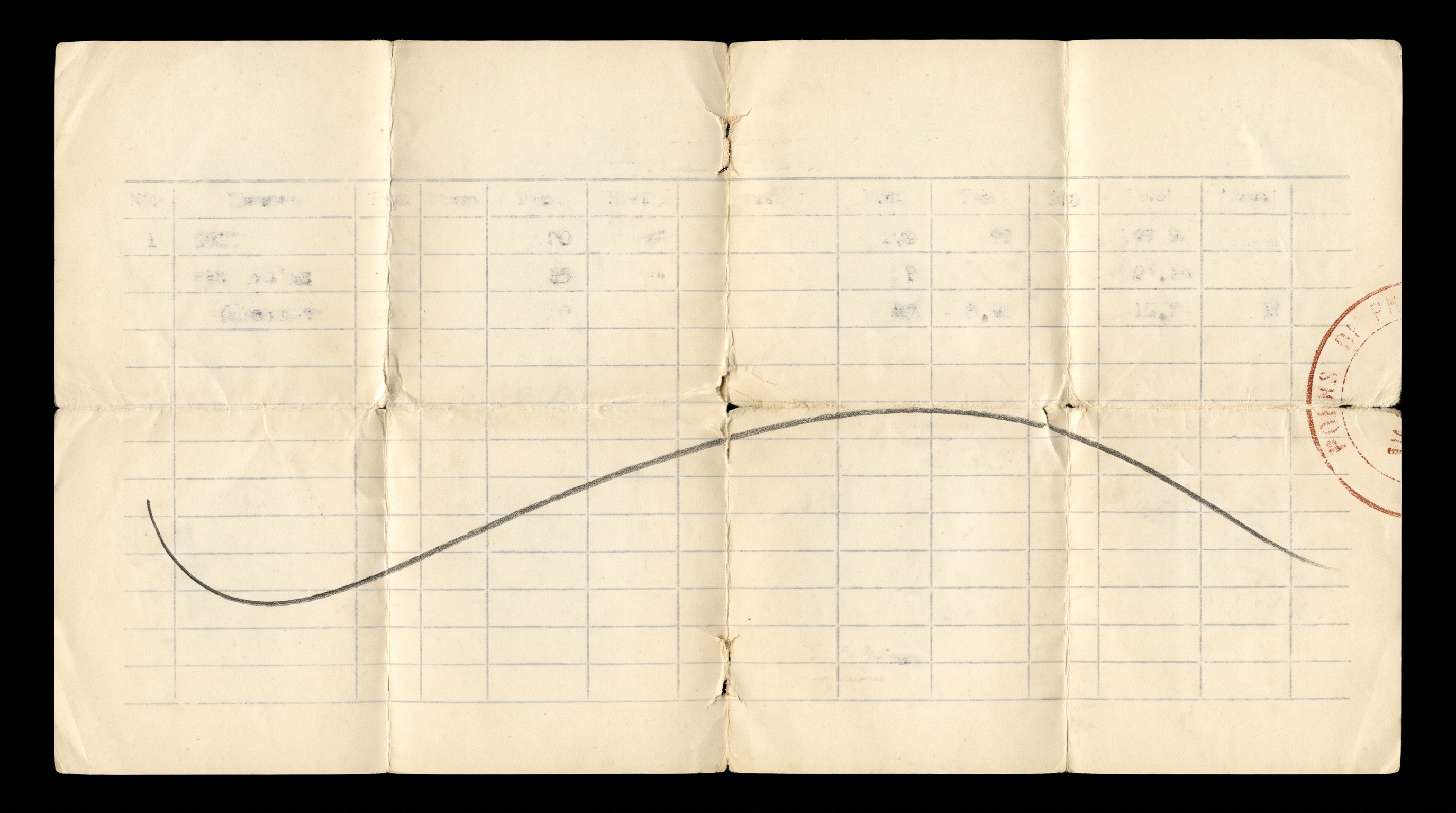
    • A logbook page ruled in faded columns, sea-area names and barometric readings in water-blurred ink.
    • A frequency allocation chart, corners foxed brown, marked with a faint pencil annotation near 147 kHz.
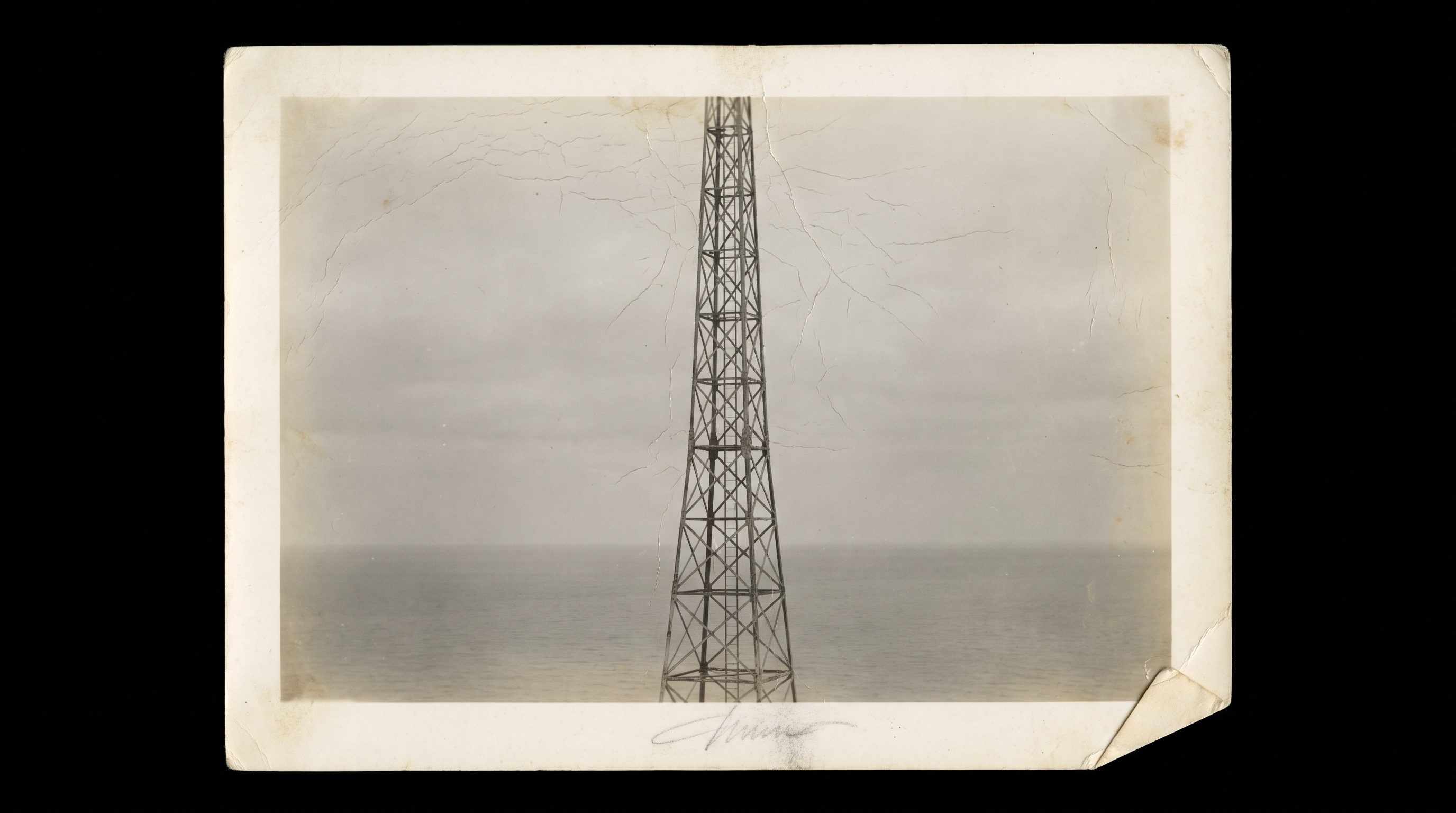
    • A black-and-white photograph of a coastal wireless mast against a flat grey sea, no figures present.

    Broadcast transcript

    A calm older voice reads invented shipping-forecast sea areas — 'Area Corvid, falling slowly. Area Halcyon, nine, backing west.' — over a bed of gentle static hiss, with a slight AM warble on the carrier.
  2. Bureau Internal

    Frequency
    500 KHZ
    Archive ID
    LW/ARC-02
    Status
    ON FILE
    First broadcast
    1962.04.01
    Last broadcast
    PRESENT
    Origin
    Bureau of Lost Frequencies, Central Archive
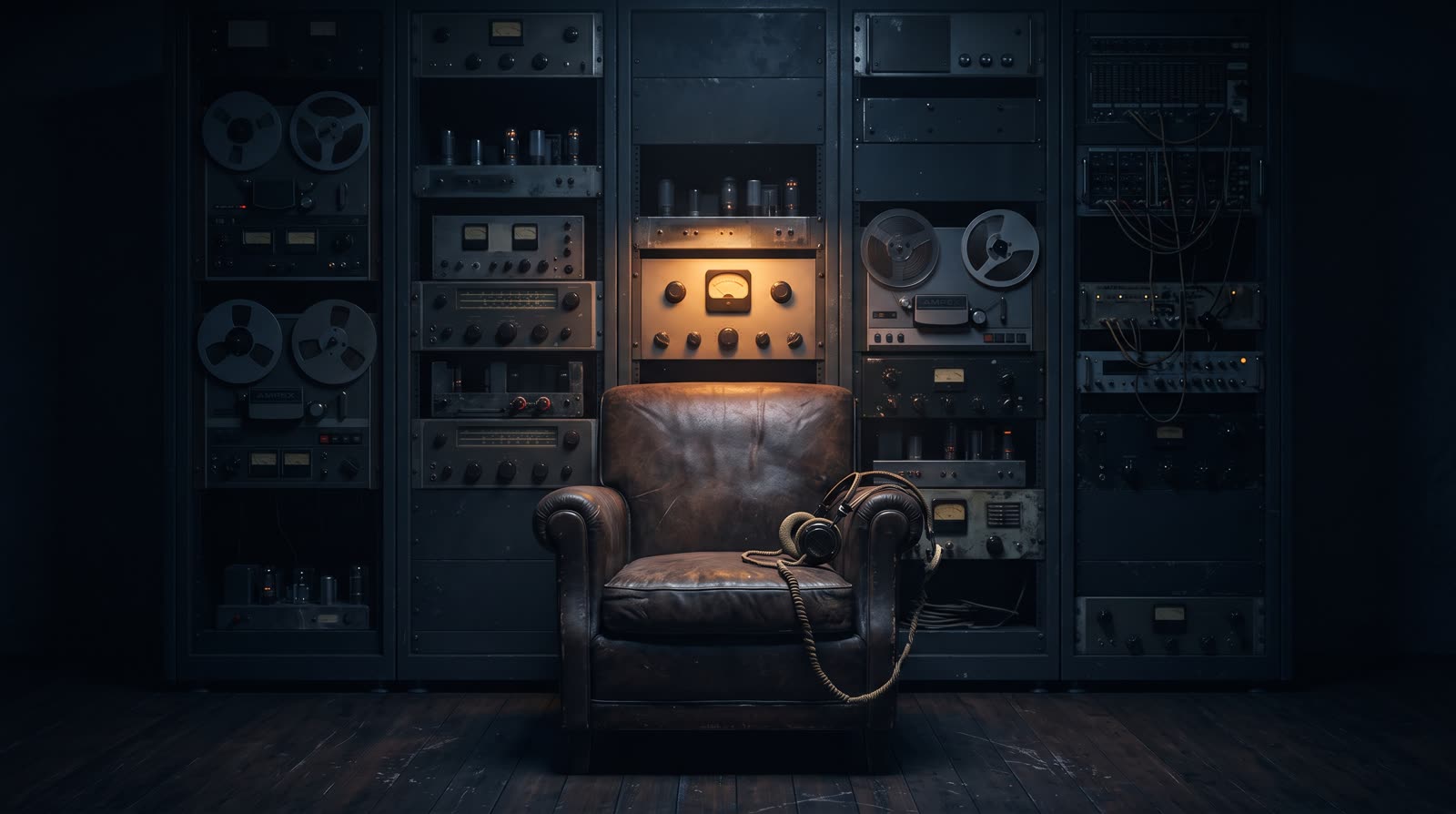
    A private listening room lined with vintage receivers and reel-to-reel tape machines, a worn leather chair, headphones resting on the armrest, one amber VU meter glowing in the dark.

    Bureau Internal is the frequency the Bureau reserves for itself. It carries no forecast, no numbers, no auction — only the maintenance traffic of an institution that catalogues everything else the air has forgotten. The listening room has one chair, one wall of receivers, and a single amber meter that has not gone dark since 1962.

    The Bureau exists to preserve extinct broadcasts: dead numbers stations, discontinued shipping forecasts, a vanished pirate signal, the last telemetry of a decommissioned satellite. Each entry in this archive was recovered, verified, and logged by hand before it reached this list. Nothing here is reconstructed. Nothing here is invented.

    This particular dossier is maintained by Kinetico, the design and development bureau that built the archive itself. The Bureau of Lost Frequencies is a fiction; the craft of preserving it is not.

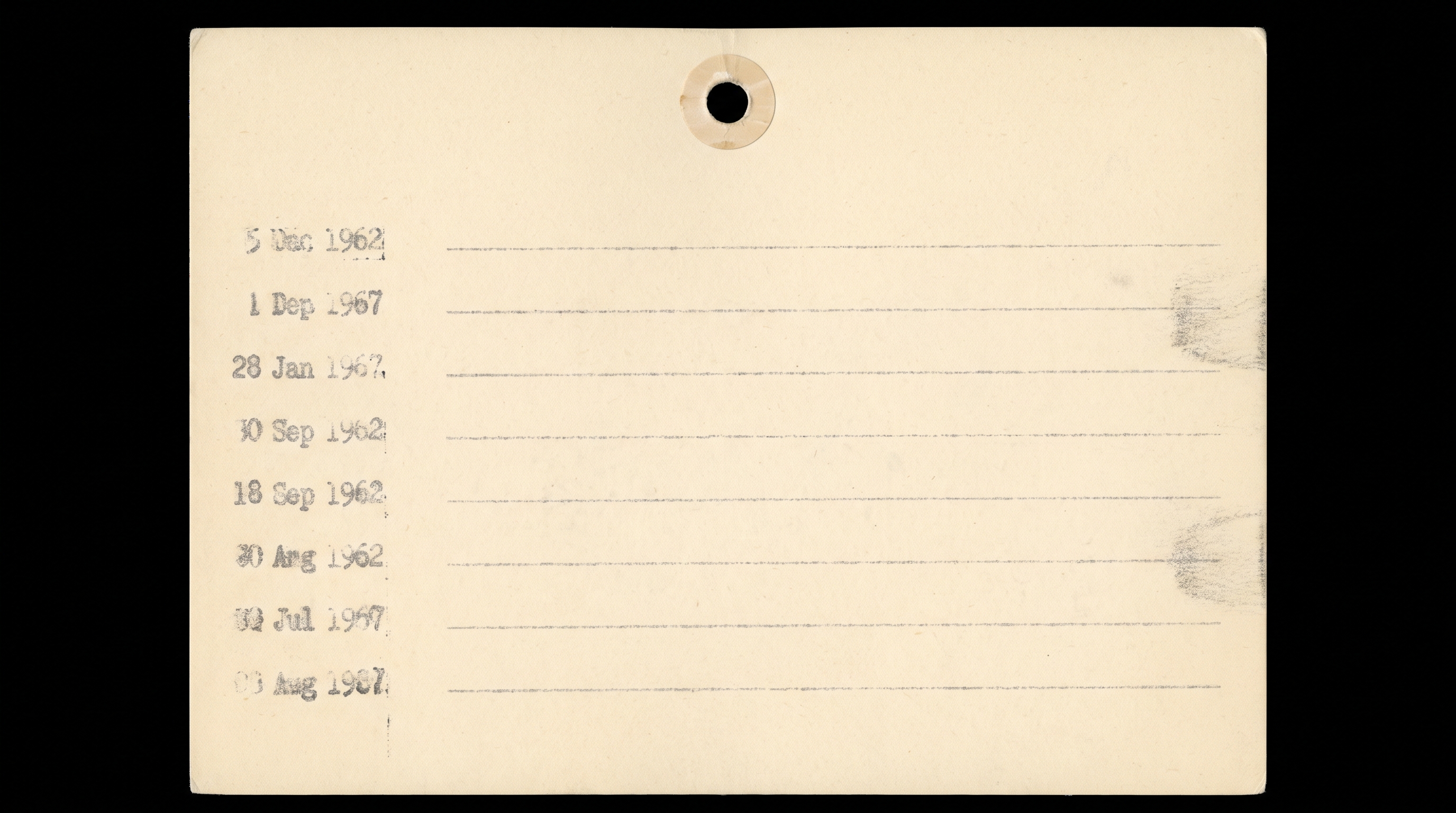
    • A logbook page listing archive intake dates in a clean, disciplined hand, ink faded but legible in outline only.
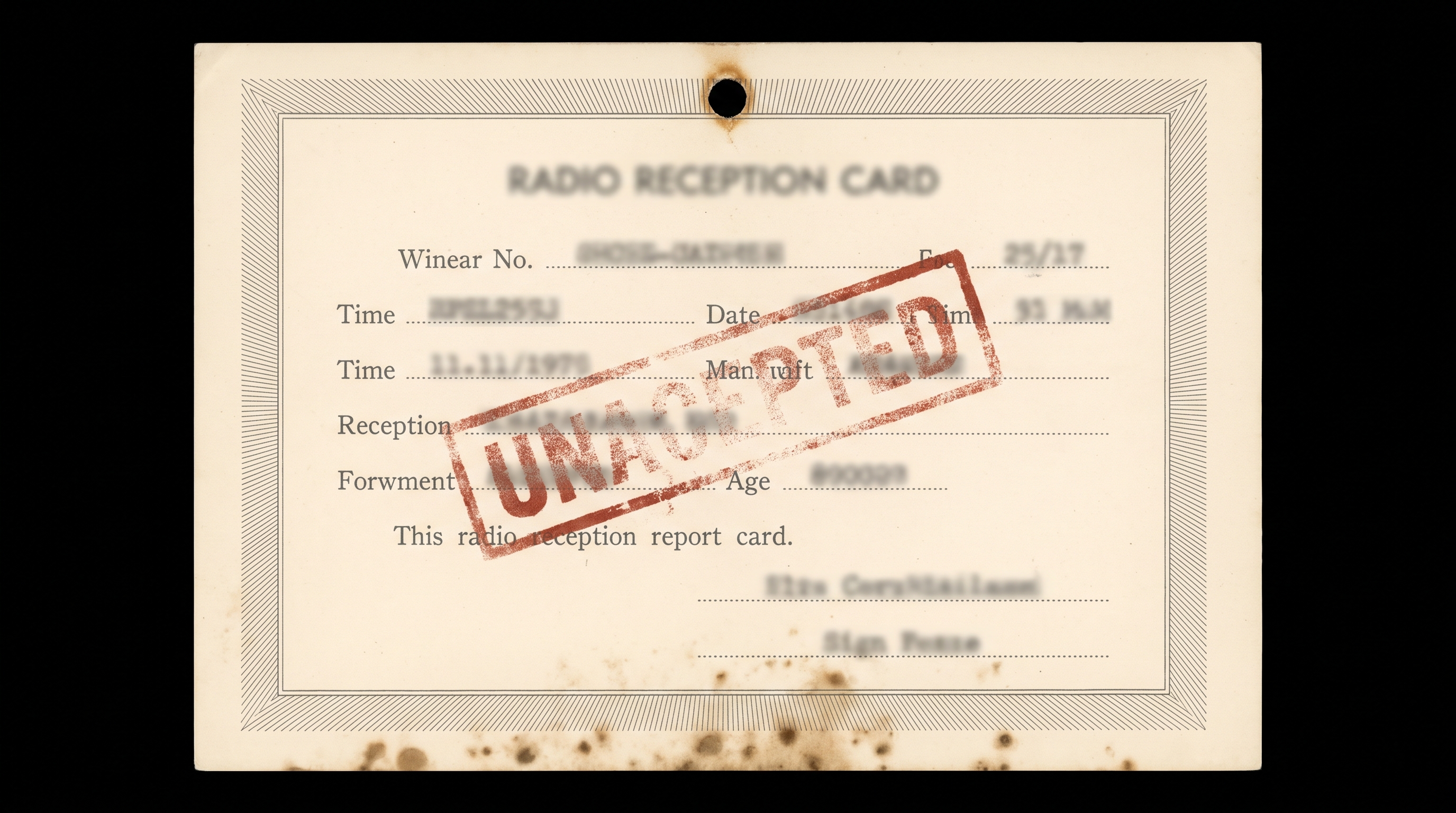
    • A QSL-style reception card bearing a Bureau stamp in faded red ink, corners still crisp.
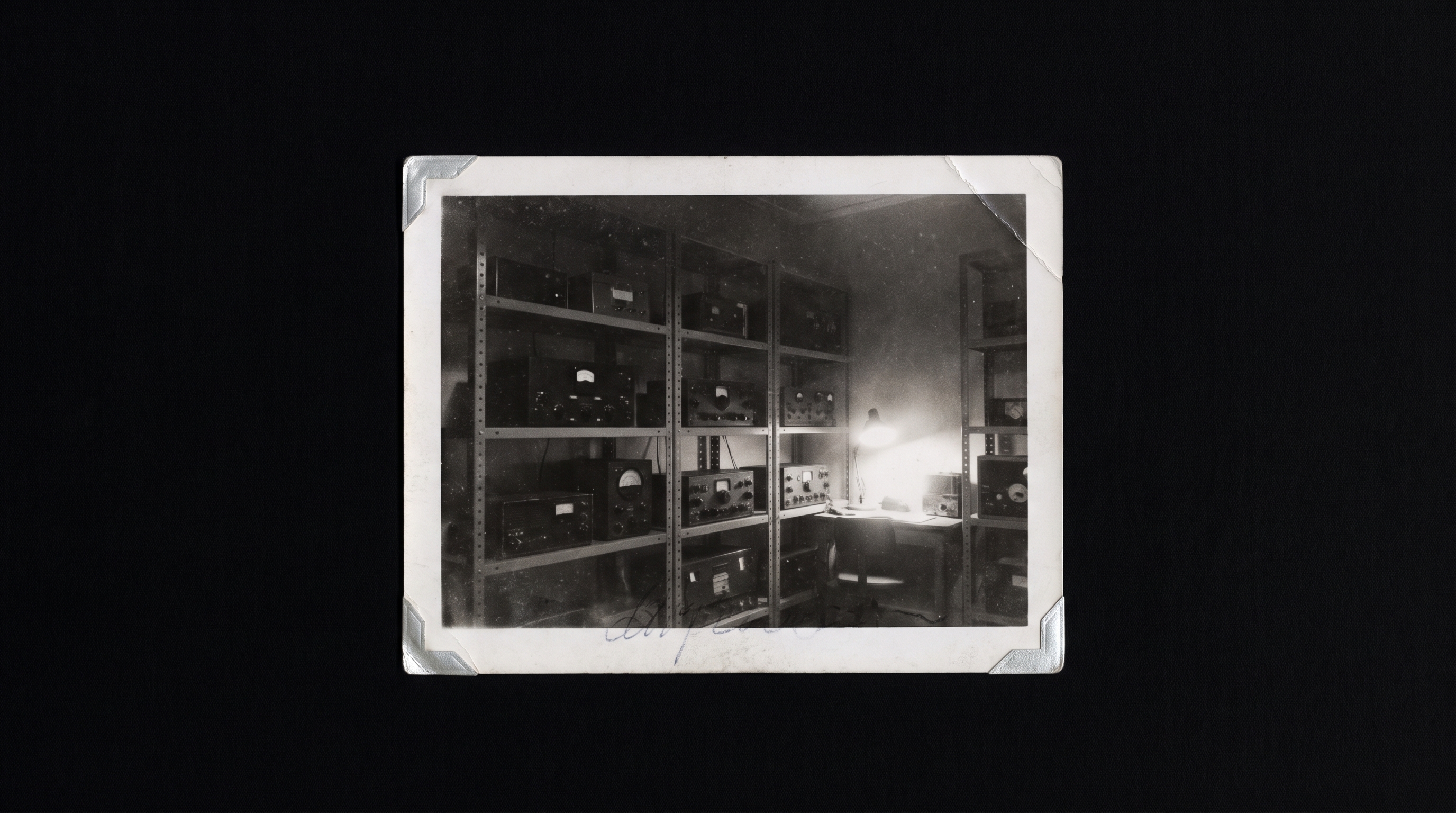
    • A black-and-white photograph of a receiver room shelving unit, cataloguing tags hanging from unlabeled reels.

    Broadcast transcript

    Room tone: tape-machine transport running, a chair creaking, a pencil moving on paper, very distant morse, and an occasional reel change. Quiet enough to be almost ASMR.

  3. Station Echo-9

    Frequency
    4.625 MHZ
    Archive ID
    LW/ARC-03
    Status
    PARTIAL RECORD
    First broadcast
    1979.06.14
    Last broadcast
    1991.02.03
    Origin
    Unknown — signal triangulated to Eastern Europe
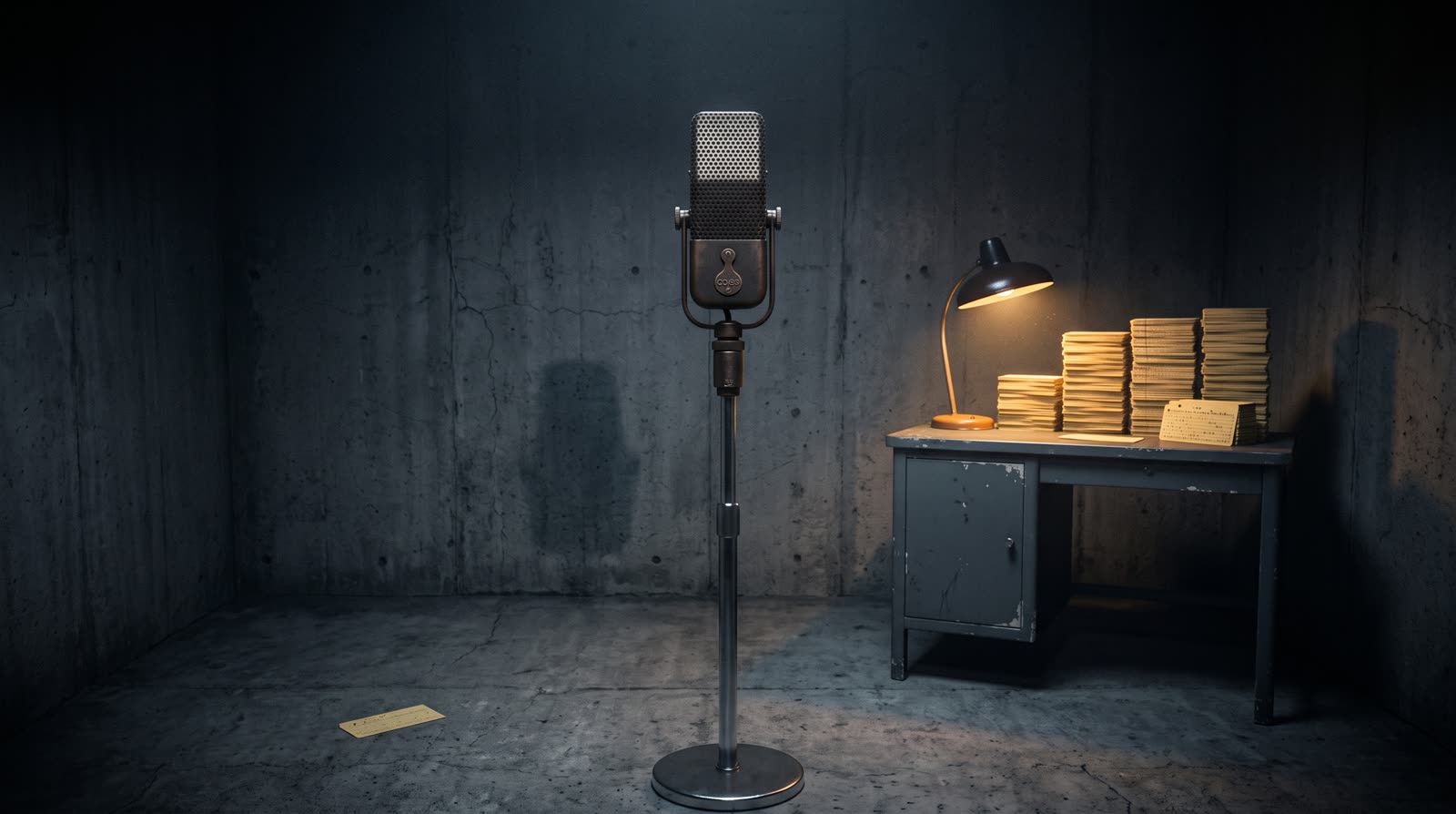
    A bare concrete room holding only a ribbon microphone on a stand and a small metal desk stacked with punch cards, a harsh amber desk lamp, everything else lost to darkness.

    Station Echo-9 opened each transmission with a four-note interval melody played on a detuned celesta, repeated without variation, followed by a flat synthetic voice reading five-digit groups. No plaintext message was ever recovered. No receiving party ever identified itself.

    Direction-finding by three independent listening posts triangulated the source to Eastern Europe, though the exact origin was never confirmed. The transmitter equipment, callsign registration, and operating authority remain unknown. The Bureau classifies this record as partial for that reason: the signal is documented, its origin is not.

    The final logged transmission, 1991.02.03, began normally. The voice reached the third group of a sequence — seven, three, zero, four, one — and stopped mid-group. No further carrier was ever detected on 4.625 MHz. The interruption was never explained.

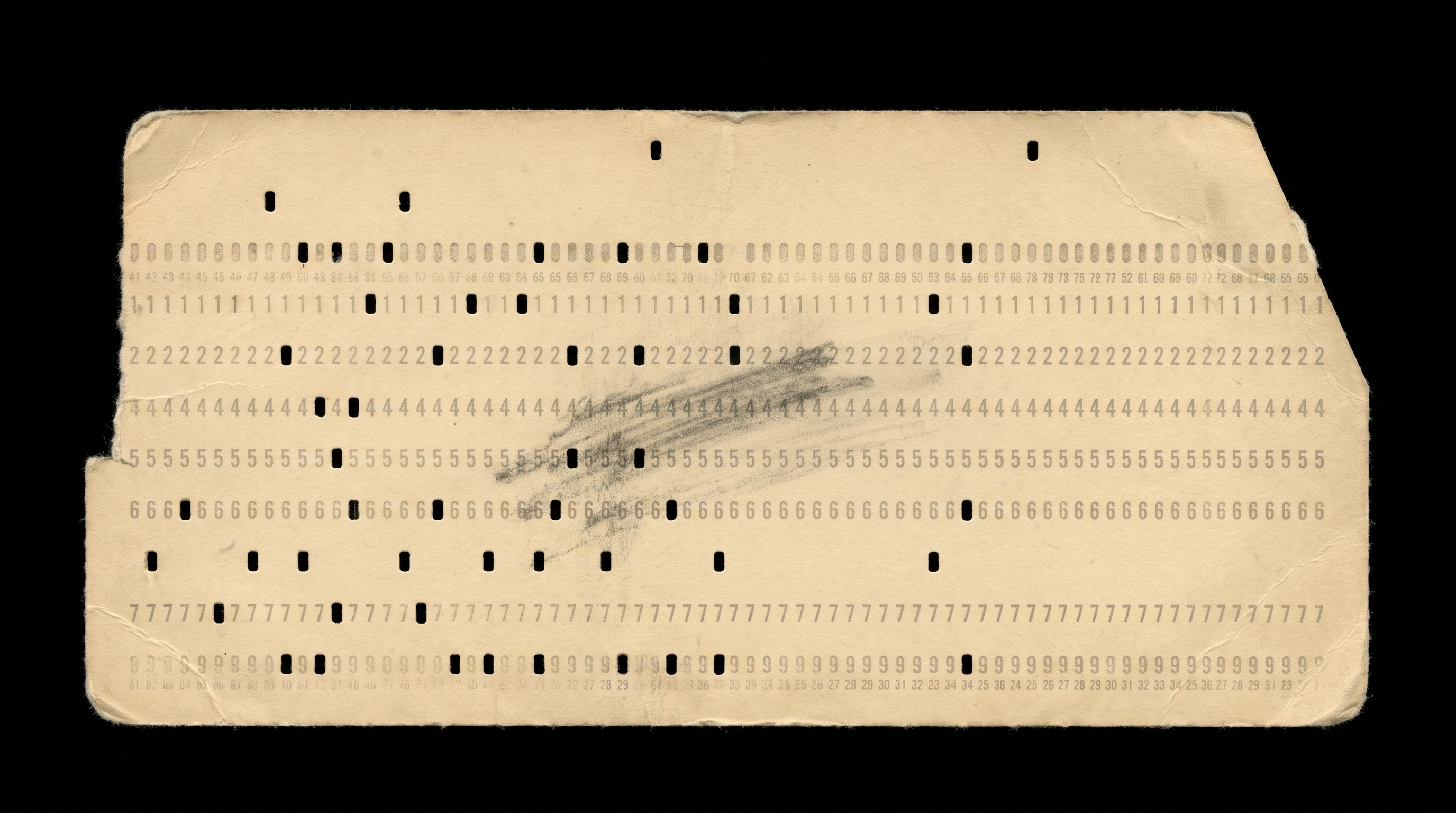
    • A punch card, rows of holes catching light against a black scanner background.
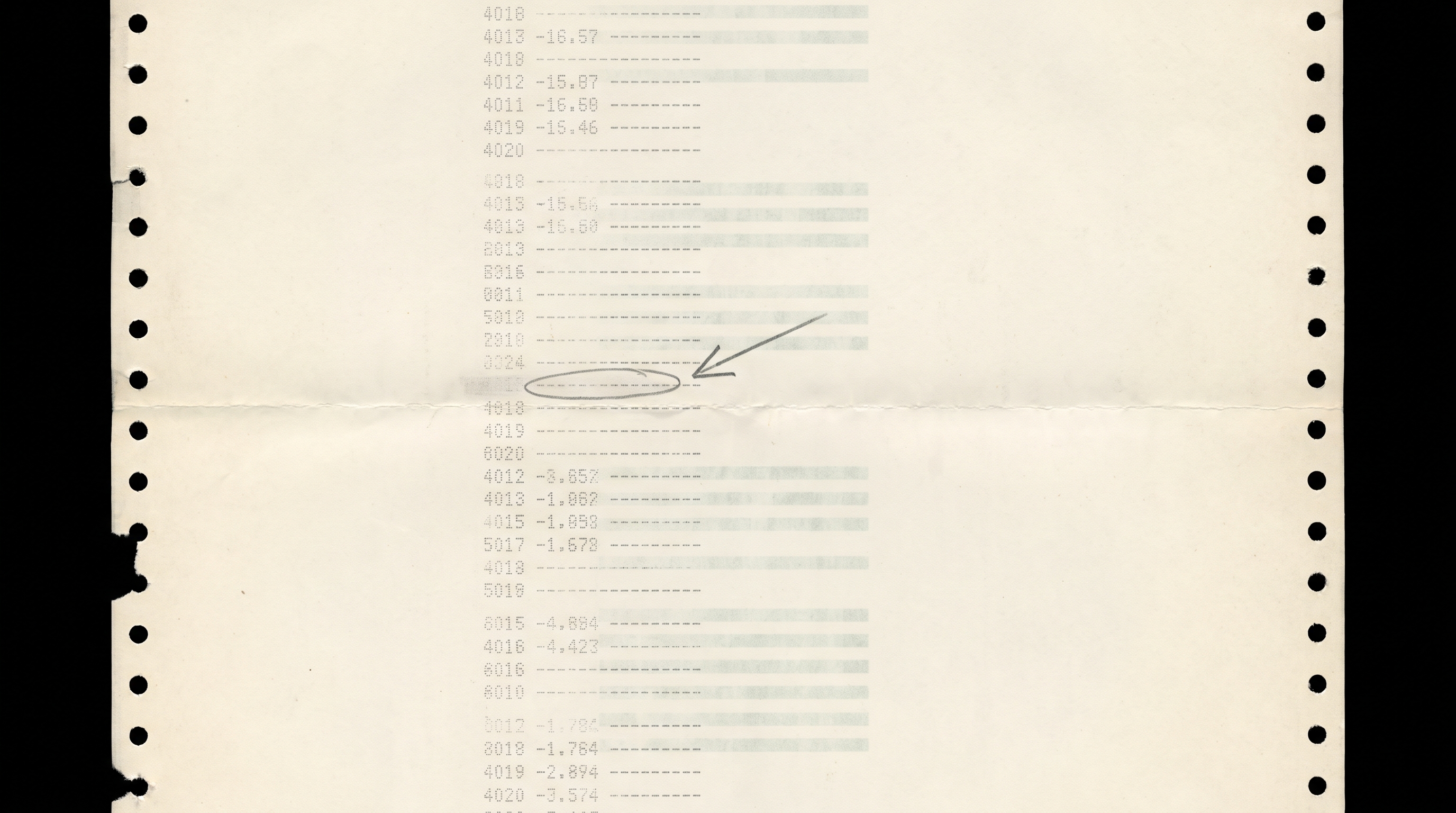
    • A logbook page of five-digit number groups in pencil, the final line trailing off unfinished.
    • A frequency allocation chart with a hand-drawn triangulation bearing sketched across three lines.

    Broadcast transcript

    An interval melody on a detuned celesta repeats four notes, then a flat synthetic female voice reads five-digit groups — '7-3-0-4-1… 7-3-0-4-1…' — and on the final loop she stops mid-group.

  4. Radio Meridiana

    Frequency
    6.3 MHZ
    Archive ID
    LW/ARC-04
    Status
    SIGNAL LOST
    First broadcast
    1985.09.01
    Last broadcast
    1987.03.22
    Origin
    MV Meridiana, international waters, Adriatic Sea
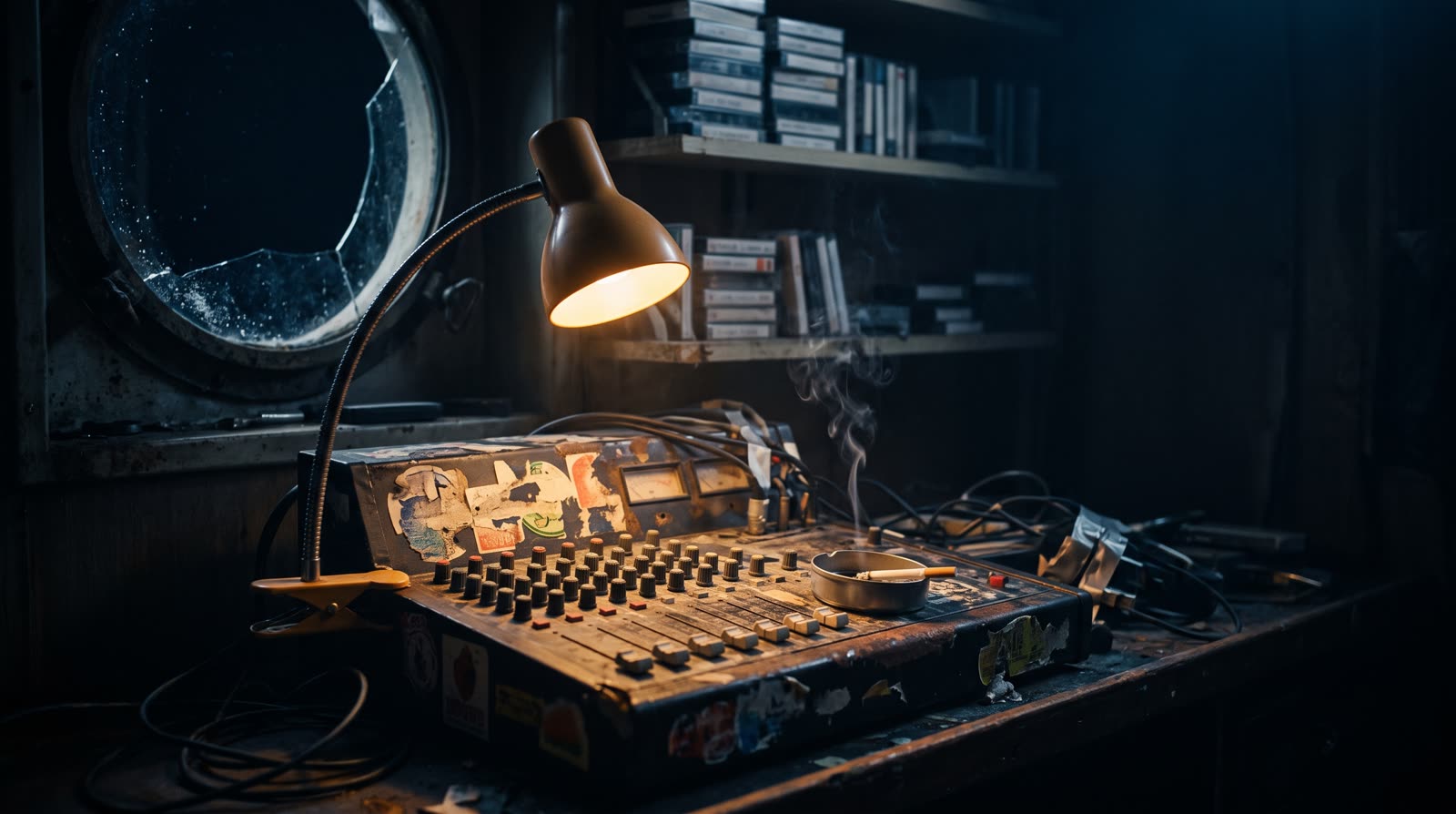
    A cramped pirate-radio cabin aboard a rusting ship, a mixing desk covered in faded stickers, cassette shelves, a cigarette still smoking in an ashtray, an amber gooseneck lamp, night sea through a small window.

    Radio Meridiana operated from a mixing desk aboard the MV Meridiana, anchored in international waters in the Adriatic Sea, broadcasting Italo-disco and synth-pop through heavy shortwave interference. A young disc jockey broke in between records, voice unintelligible against the static, laughing at something never explained on air.

    The station carried no advertising, no license, and no fixed schedule. It transmitted when the crew felt like transmitting and went dark for weeks without notice. Listeners along the Adriatic coast tracked it by ear, retuning nightly to see whether the carrier had returned.

    Last verified transmission: 1987.03.22. The frequency has been quiet since. Maritime records show the MV Meridiana was towed for scrapping later that year; no further trace of the crew or equipment was recovered.

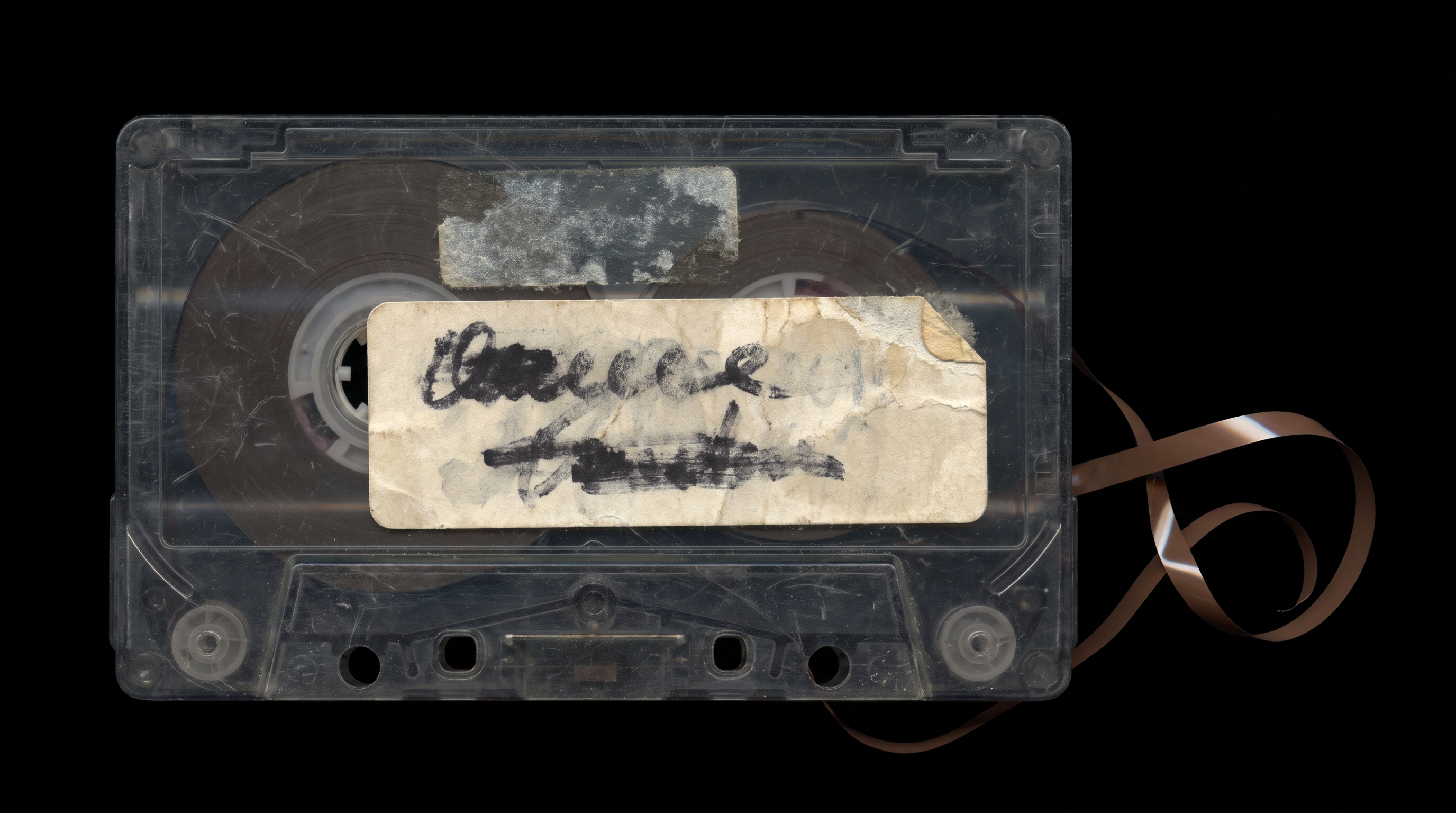
    • A cassette with a handwritten label, ink smeared, sitting on a stained paper backing.
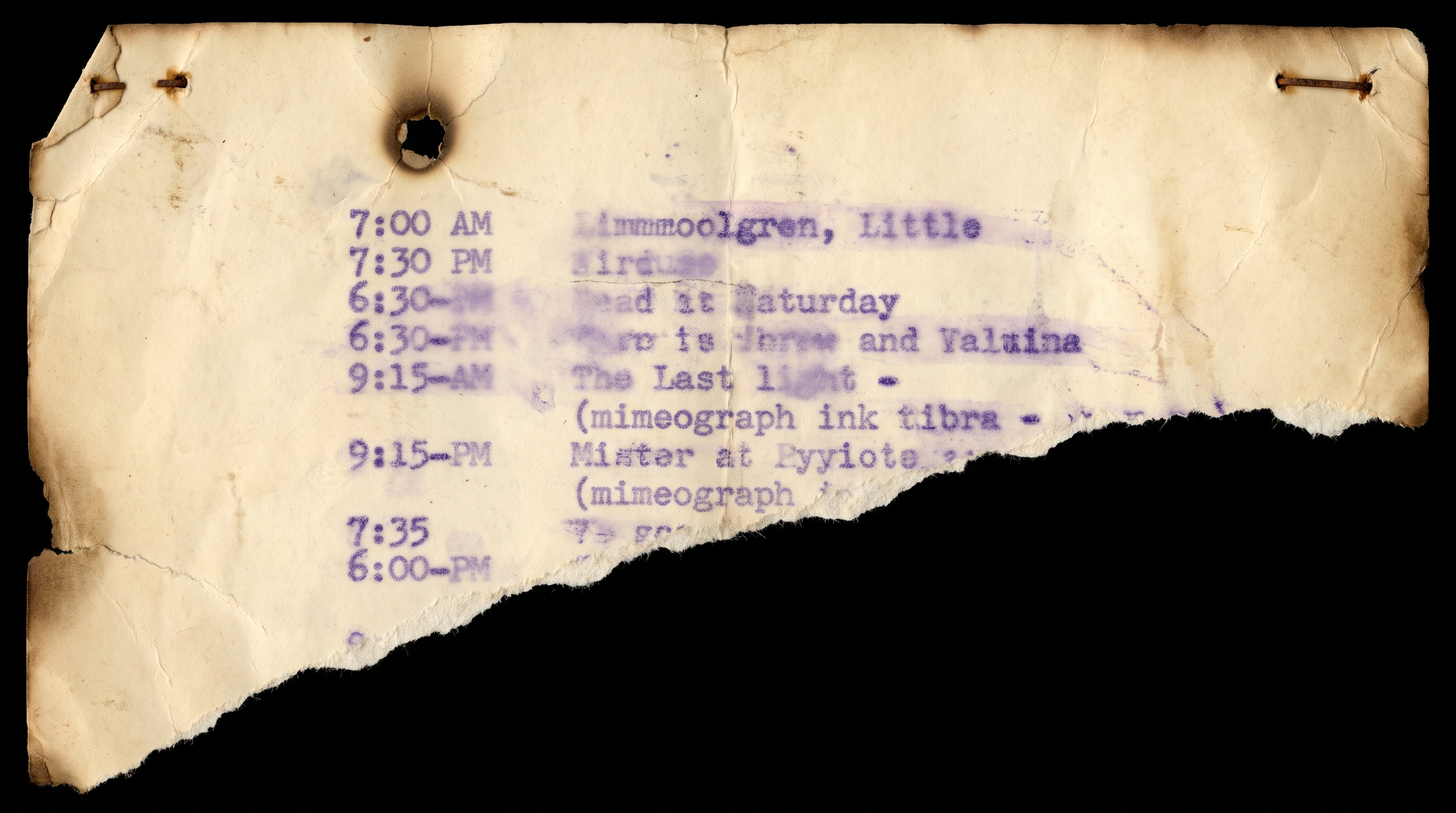
    • A torn broadcast schedule with faded ballpoint annotations along the margin.
    • A black-and-white photograph of a ship hull at anchor, sea flat, no figures visible on deck.

    Broadcast transcript

    A 1987 Italo-disco track plays through heavy shortwave static, fading in and out, interrupted briefly by a young DJ voice speaking Italian, laughing, words unintelligible.

  5. OSPREY-1

    Frequency
    12.7 MHZ
    Archive ID
    LW/ARC-05
    Status
    SIGNAL LOST
    First broadcast
    1974.08.11
    Last broadcast
    1989.12.05
    Origin
    Low Earth orbit, decommissioned relay satellite
    A decommissioned satellite drifting in black orbit, crinkled gold foil insulation catching one amber sun glint, a solar panel half in shadow, Earth's limb faint and blue far below.

    OSPREY-1 transmitted telemetry from low Earth orbit for fifteen years after its operational relay function was formally decommissioned. Ground stations continued to log a clean beep every two seconds, drifting in pitch with the satellite's orbital velocity, alongside intermittent data bursts no receiving agency claimed responsibility for interpreting.

    No maintenance was performed on OSPREY-1 after decommissioning. Its continued transmission was attributed to a battery and beacon circuit that outlasted its designed service life by a wide margin. Engineers who reviewed the telemetry pattern found it consistent, unchanging, and without evident purpose beyond the beacon itself.

    On 1989.12.05, the beacon's pitch drift lengthened into one long descending tone before the carrier dropped. Tracking stations recorded no further signal. Orbital decay models suggest the satellite itself may still be aloft; the frequency has carried nothing since.

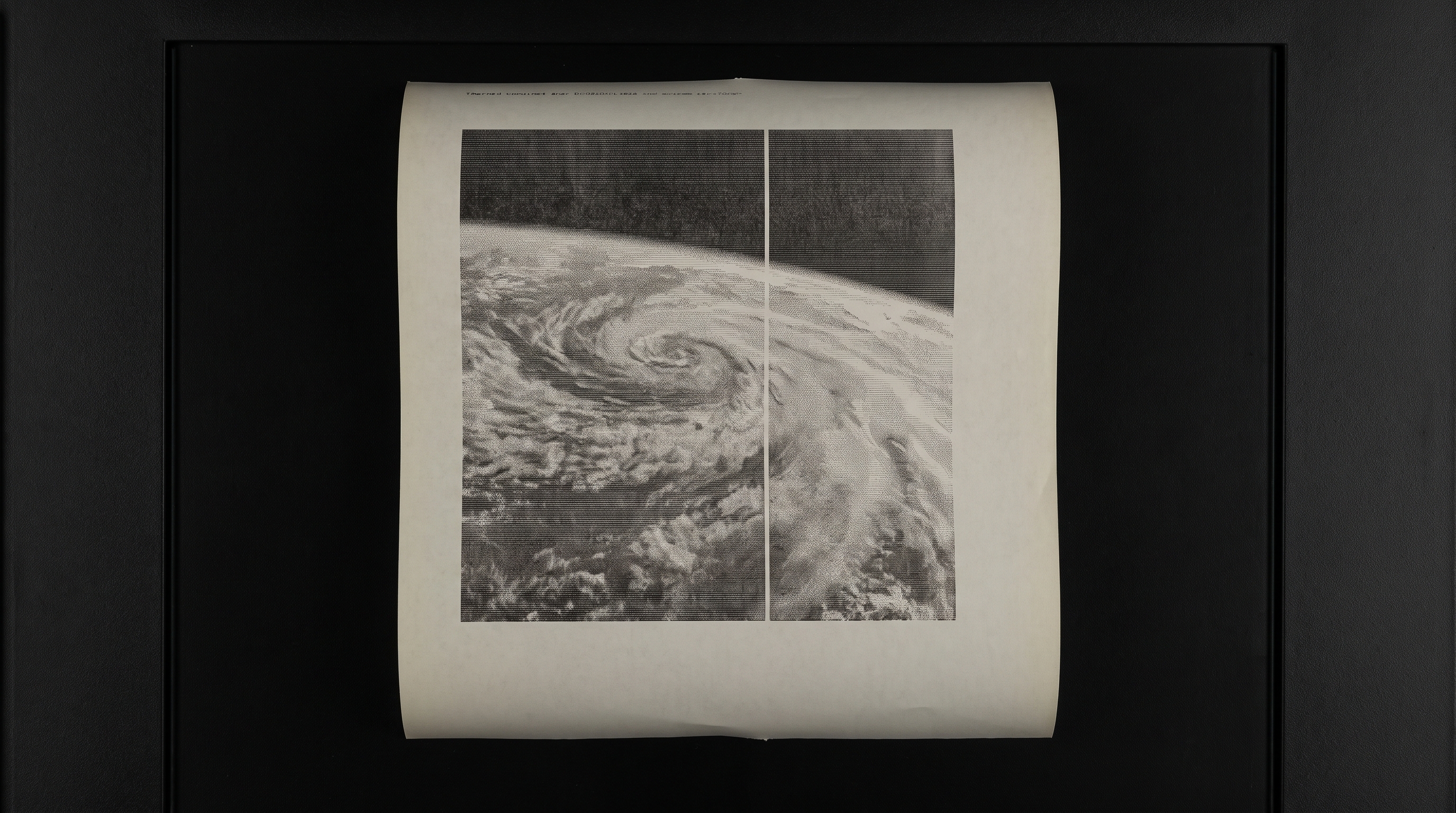
    • A fax-quality satellite image printout, grainy and faint, banding artifacts across the frame.
    • A logbook page of orbital telemetry readings in tight pencil columns, ink faded at the fold.
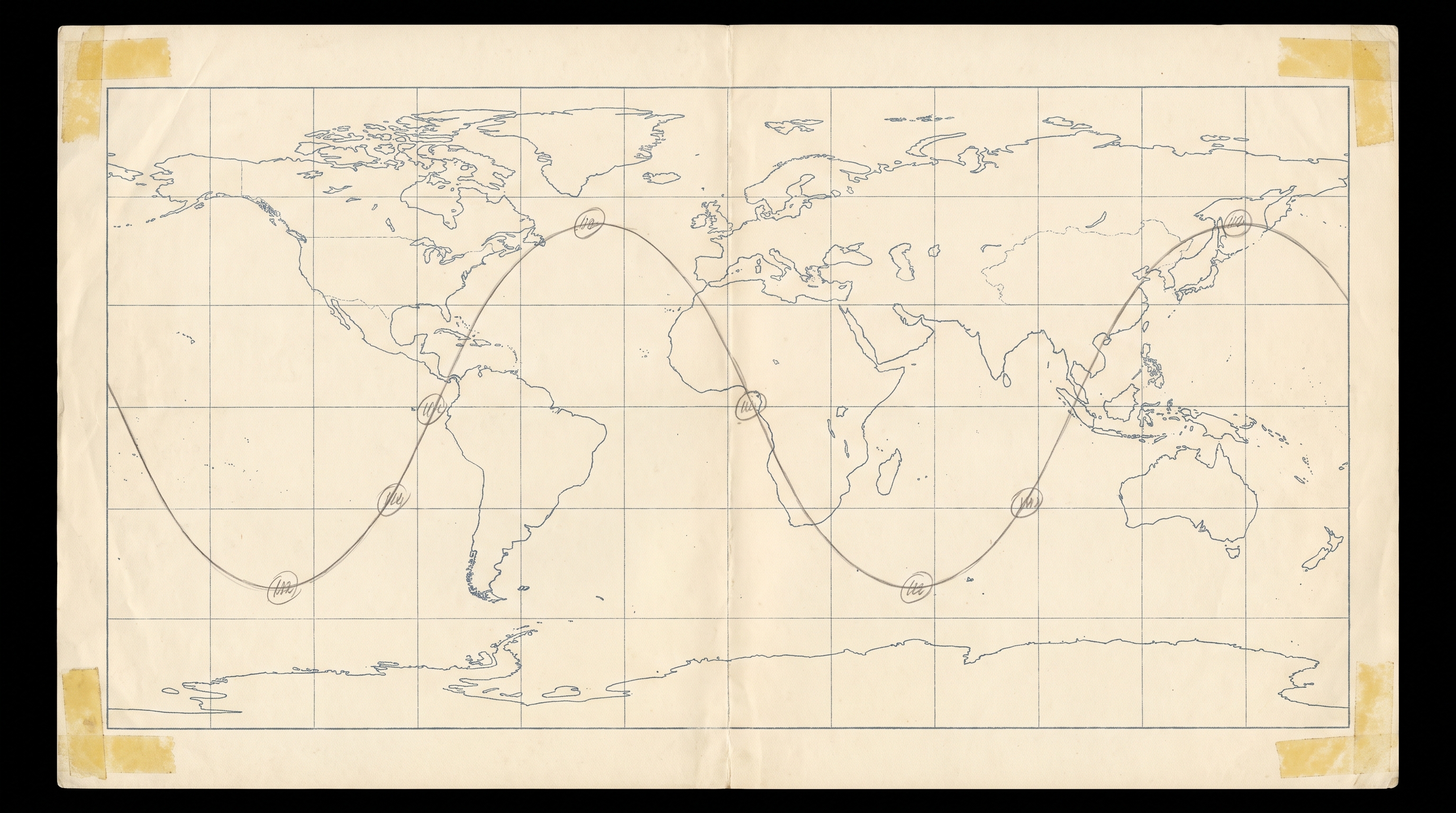
    • A frequency allocation chart annotated with a decaying orbital pass schedule, corners water-stained.

    Broadcast transcript

    Slow telemetry: a clean beep every two seconds with doppler pitch drift, intermittent data-burst chirps, cosmic background hiss, ending in one long, lonely descending tone.

  6. The Night Auction

    Frequency
    17.2 MHZ
    Archive ID
    LW/ARC-06
    Status
    PARTIAL RECORD
    First broadcast
    1966.10.31
    Last broadcast
    1993.02.14
    Origin
    Undisclosed private auction house, believed Continental Europe
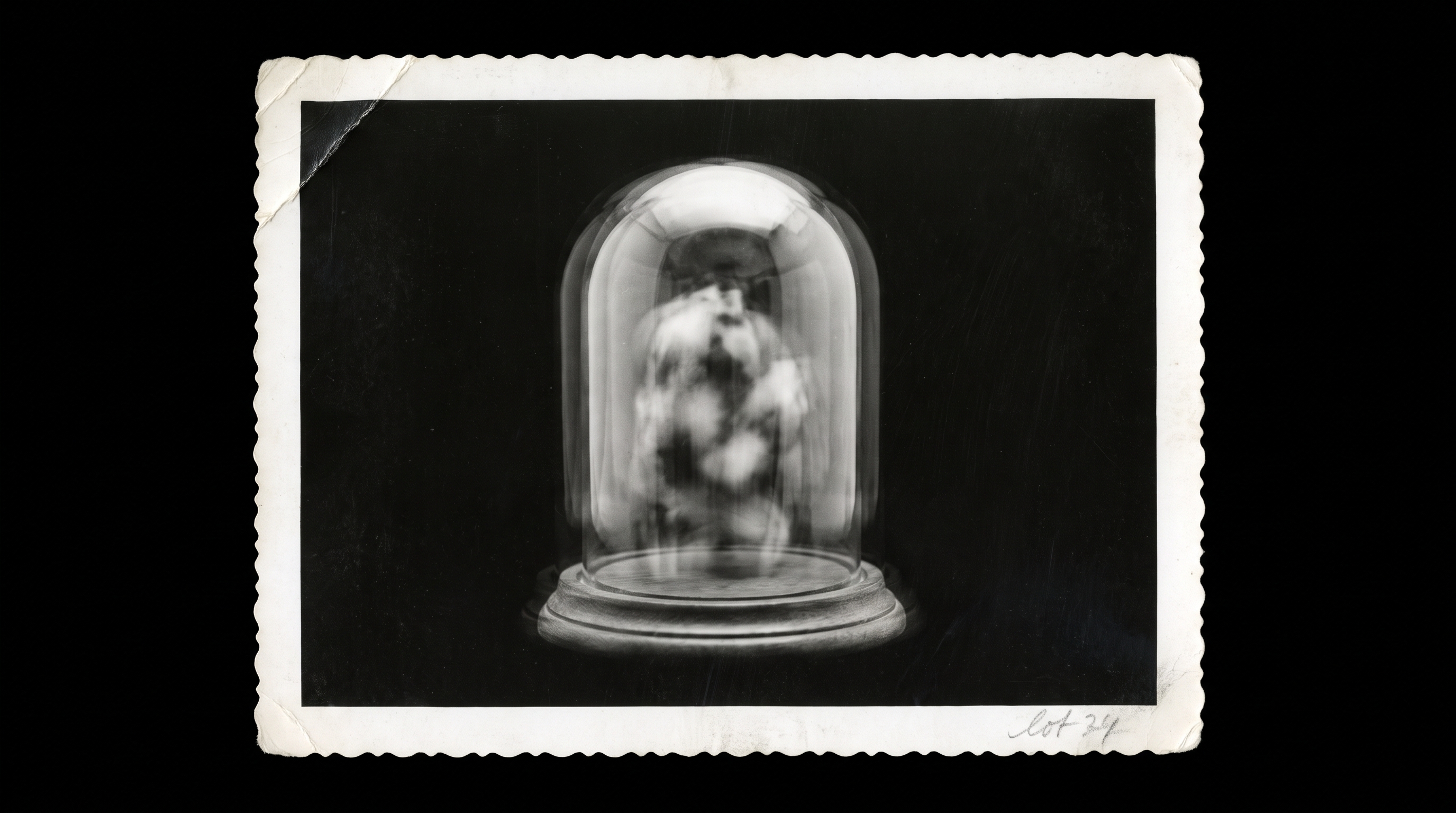
    An auction podium in a vast dark hall, a gavel beside a bell jar containing an indistinct small object, one amber picture light, rows of empty chairs dissolving into blackness.

    The Night Auction broadcast overnight sales from a private auction house whose location was never disclosed and is believed, on circumstantial evidence, to have operated somewhere on the Continent. The auctioneer's murmur was never fully intelligible on any recovered recording, though paper shuffling, a soft gavel knock, and low crowd murmur registered clearly throughout.

    No catalogue for any Night Auction sale has ever surfaced. Listeners who logged the broadcast described lots described only in fragments — a jar, a case, an object identified once as "not for handling." Whether these lots existed as described, or existed at all, was never established by the Bureau.

    Transmission continued intermittently for twenty-seven years and ceased on 1993.02.14 without a closing lot recorded. The auction house, if it existed, left no further trace. The frequency has been quiet since, though the Bureau notes an unusually high number of listener reports describing a faint clock ticking beneath the static, long after the broadcast itself had ended.

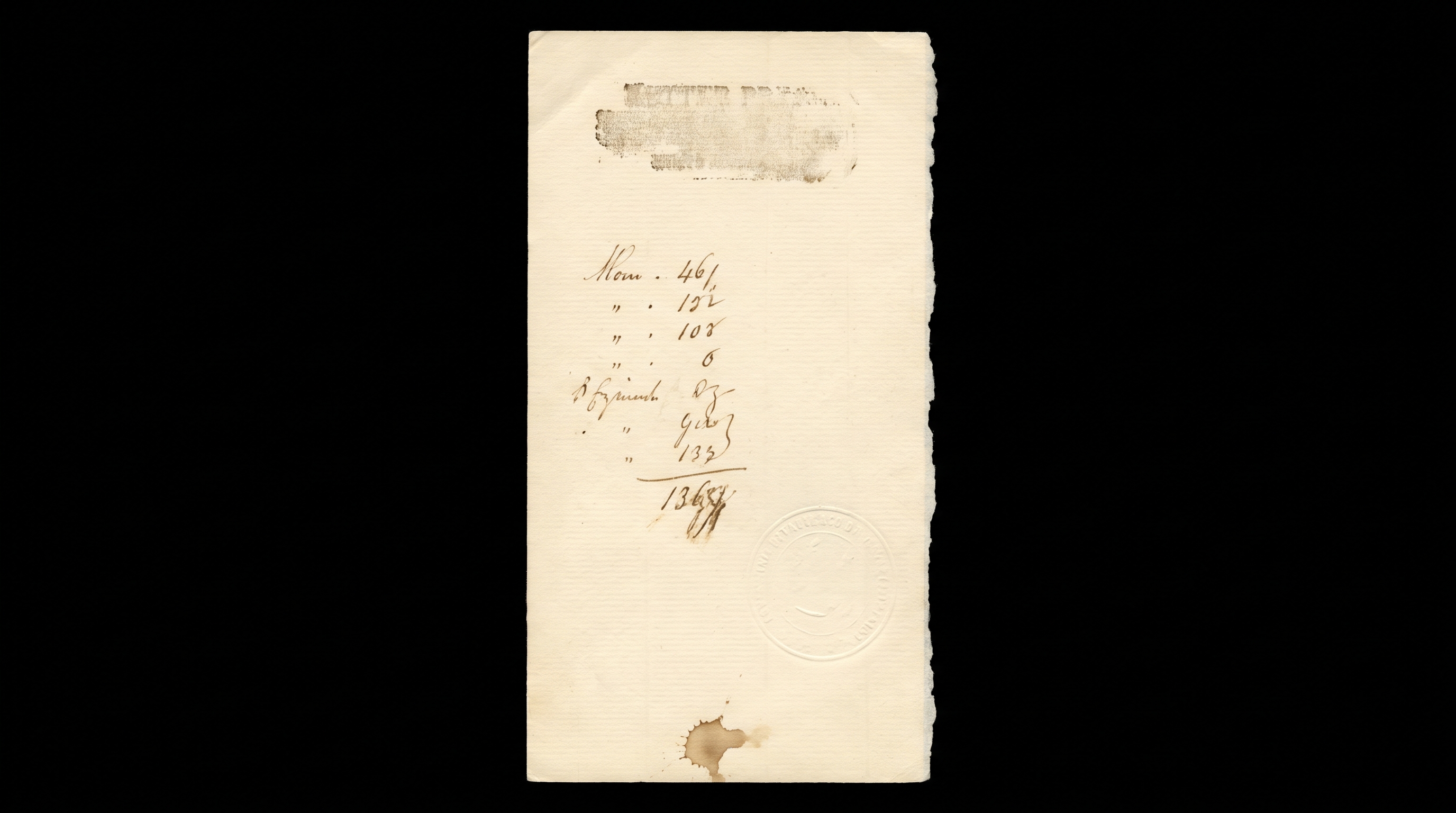
    • A customs or auction receipt, faded ink figures in a column, corners softened by handling.
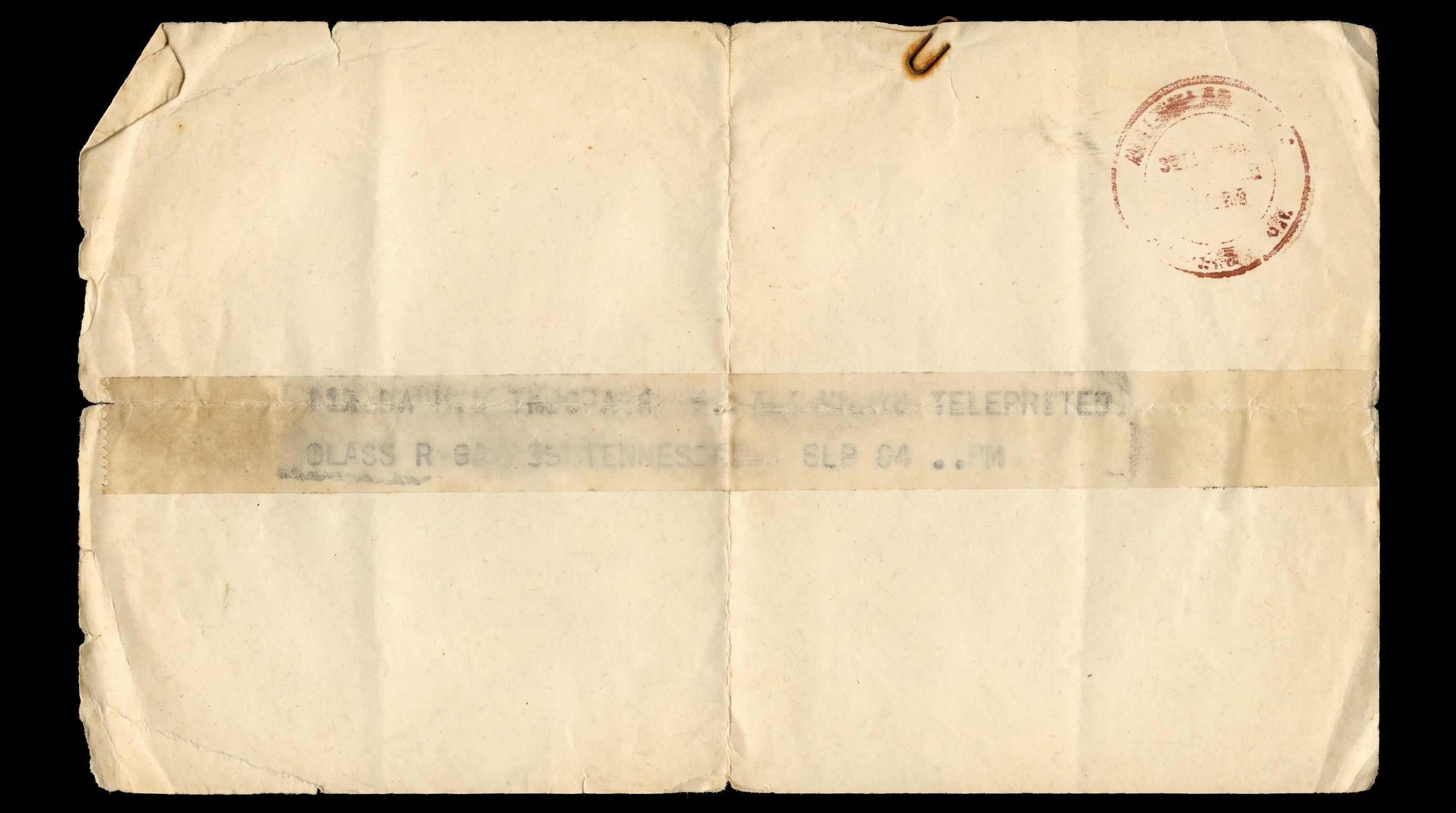
    • A telegram slip with an illegible cabled message, creased and water-marked at one edge.
    • A black-and-white photograph of an empty auction hall, chairs in rows, no figures present.

    Broadcast transcript

    A hushed auctioneer murmur, words unintelligible, paper shuffling, a soft gavel knock, low crowd murmur, and a clock ticking beneath it all.